

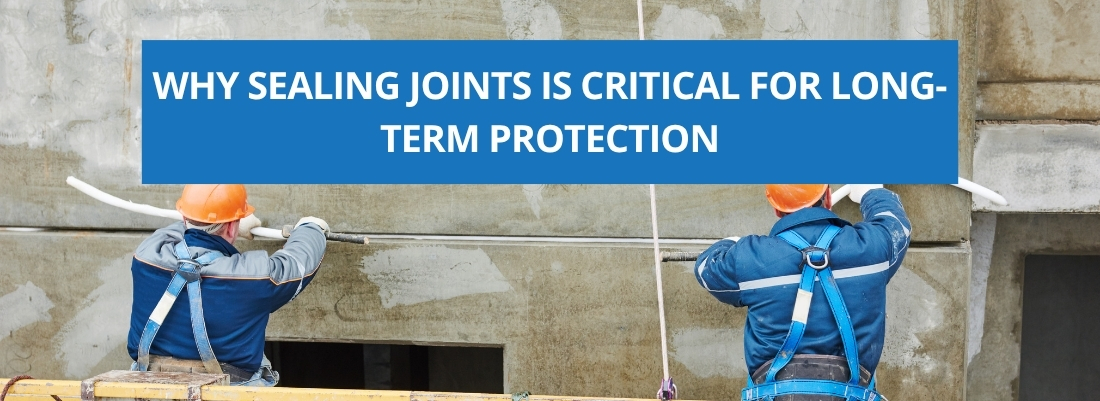
28 Aug Why Sealing Joints Is Critical for Long-Term Protection
Short answer: Sealing joints helps prevent water from entering through gaps where building materials meet.
A properly selected and installed joint seal can accommodate movement, reduce water penetration, and protect surrounding structures from moisture-related damage over the long term.
Introduction
Joints are an essential part of many buildings and structures. They allow different sections of a building to move, accommodate changes in temperature, and provide necessary connections between materials.
However, these joints can also become vulnerable points for water ingress. If gaps or joints are not properly sealed, rainwater and moisture can find a path into the structure.
For buildings in Singapore, where heavy rainfall and high humidity are common, effective joint sealing is an important part of long-term waterproofing and building maintenance.
Why Are Building Joints Vulnerable To Water?
A joint creates a transition between two surfaces or sections of a structure. Unlike a continuous concrete or masonry surface, the joint is intentionally designed to have some degree of separation or movement.
Over time, several factors can affect an unprotected or poorly sealed joint:
- Rainwater exposure
- Thermal expansion and contraction
- Structural movement
- Vibration
- Material shrinkage
- Ageing of sealants
- Mechanical damage
If the joint seal deteriorates, water may enter through the opening and travel into surrounding materials.
This means that even a relatively small joint can become a significant source of leakage if it is not properly protected.
What Is Joint Sealing?
Joint sealing involves filling or covering a joint with a suitable sealant or waterproofing material to prevent unwanted water and moisture penetration.
The objective is not necessarily to make the joint completely rigid. A good joint seal should be compatible with the movement expected at that location, while maintaining an effective barrier against water.
Depending on the application, joint sealing may involve:
- Flexible sealants
- Joint tapes
- Waterproofing membranes
- Backer rods
- Reinforcement systems
- Specialised joint treatment
The appropriate method depends on the type, size, location and expected movement of the joint.
Where Are Sealed Joints Commonly Found?
Joints can be found throughout commercial, residential and industrial buildings.
Common examples include:
Expansion Joints
Expansion joints allow different sections of a building or structure to move independently. They can be particularly vulnerable to water ingress, because movement is an inherent part of their design.
Construction Joints
Construction joints occur where concrete or other materials are placed at different stages of construction.
If not properly detailed, these junctions can provide potential pathways for water.
Floor And Wall Joints
Joints between floors, walls and other structural elements may require sealing where they are exposed to moisture.
Roof Joints
Commercial roofs often contain joints around different roof sections, parapets, penetrations and other structural details.
Basement And Underground Structures
Joints below ground level can be especially important, because water pressure from surrounding soil can drive moisture through weaknesses in the structure.
Why Joints Need Flexible Protection
Buildings are not completely static.
Materials can expand and contract with temperature changes, while structures may experience movement caused by settlement, vibration, wind or normal building activity.
A rigid material may crack or separate when subjected to repeated movement.
This is why joint sealants are often selected based on their flexibility and movement capability.
The seal needs to remain sufficiently bonded to the surrounding surfaces while accommodating the expected movement of the joint.
What Happens When Joint Seals Fail?
Joint seal failure can begin with a relatively small defect.
Common signs include:
- Cracking
- Peeling
- Shrinkage
- Gaps between the sealant and substrate
- Loss of adhesion
- Discolouration
- Damp patches
- Visible water penetration
If the problem is not addressed, moisture may move beyond the immediate joint and affect surrounding materials.
Over time, persistent water ingress can contribute to deterioration of concrete, corrosion of embedded reinforcement, and damage to interior finishes.
Joint Sealing And Waterproofing
Joint sealing is often one component of a larger waterproofing system.
Waterproofing a surface without addressing vulnerable joints can leave potential entry points behind.
For example, a waterproof membrane may provide effective coverage across a concrete roof, but a poorly sealed expansion joint can still allow water to pass through the system.
This is why professional waterproofing requires attention to both the main surface and the details around it.
Waffen provides waterproofing solutions for different parts of a building, including roof waterproofing, concrete structures and areas where water ingress may occur. Its waterproofing services include systems designed to address cracks, joints and other vulnerable areas.
Why Surface Preparation Matters
Even a high-performance sealant can fail if the joint is not prepared correctly.
Before sealing, the area may need to be:
- Cleaned of dust, dirt and contaminants
- Checked for existing damage
- Dried where required
- Repaired if the surrounding substrate is deteriorated
- Prepared with the appropriate primer where necessary
- Fitted with backer material if required
- Sealed using the appropriate product and application method
Poor preparation can prevent the sealant from bonding properly with the surrounding surfaces. This can lead to premature separation and leakage.
Choosing The Right Joint Sealant
Different joints have different requirements, so selecting a sealant based purely on price or convenience may not provide the expected service life.
Consider the following:
| Consideration | Why It Matters |
|---|---|
| Joint movement | The seal must accommodate expected expansion, contraction or movement |
| Substrate | Different materials may require different sealants or preparation |
| Water exposure | Exterior and constantly exposed joints need suitable moisture resistance |
| Joint width | The size and geometry of the joint affect the sealing method |
| Temperature | Outdoor joints experience changes in temperature and weather |
| Chemical exposure | Industrial environments may expose seals to chemicals or contaminants |
| Durability | High-traffic or exposed locations may require greater resistance to wear |
The right product should be selected based on the actual conditions, rather than assuming one sealant is suitable for every application.
Joint Design Matters As Much As The Sealant
A common misconception is that joint waterproofing is simply a matter of filling a gap with sealant.
In reality, the design and condition of the joint can be just as important as the product being used.
The joint should have suitable dimensions and a properly prepared substrate. Where required, systems may also incorporate backing materials or reinforcement to control the sealant profile and movement.
This is particularly important for larger structural or expansion joints.
Why Commercial Buildings Need Particular Attention
Commercial buildings can have extensive roof areas, basements, car parks, plant rooms and other areas where joints are exposed to water.
They may also experience:
- High levels of foot traffic
- Frequent maintenance work
- Heavy equipment
- Mechanical vibration
- Temperature changes
- Large amounts of rainwater
- Complex building services
A failed joint in a commercial building can therefore have consequences beyond a simple cosmetic defect.
Water entering through a roof or basement joint may affect equipment, stored goods, electrical systems or occupied areas.
Joint Sealing For Roofs
Roof joints deserve particular attention because they are directly exposed to weather.
Flat and low-slope commercial roofs may contain multiple joints and changes in level. Drainage systems, equipment bases and penetrations can create additional areas that require careful waterproofing.
Waffen’s roof waterproofing services include torch-on membrane and liquid-applied waterproofing systems, which can be selected according to the roof’s condition and requirements.
When waterproofing a roof, joints should be assessed as part of the complete system, rather than treated separately from the main roof surface.
Joint Sealing For Concrete Structures
Concrete may appear solid and impermeable, but cracks and joints can provide pathways for water.
Joints can occur in:
- Basement walls
- Retaining walls
- Concrete floors
- Car parks
- Swimming pools
- Water tanks
- Podiums
- Commercial structures
The appropriate waterproofing approach depends on whether the joint is static or moving, its exposure to water, and the condition of the surrounding concrete.
How To Identify Potential Joint Problems
Regular inspection can help identify deterioration before it develops into a larger waterproofing problem. Look for:
Visible Gaps
A gap between the sealant and the surrounding surface can indicate loss of adhesion.
Cracking
Cracked sealant may no longer provide continuous protection.
Shrinkage
A seal that has pulled away from the edges of the joint may allow water to enter.
Dampness
Water stains, damp patches or mould near a joint may indicate moisture penetration.
Repeated Leakage
If water appears in the same area after heavy rain, the nearby joints and construction details should be investigated, rather than assuming the visible leak is the actual source.
Why Early Repairs Can Be More Effective
Joint deterioration does not necessarily mean that the entire structure requires waterproofing replacement.
In some situations, addressing the affected joint early can prevent water from penetrating further into the surrounding structure.
However, simply applying new sealant over an existing failed layer may not solve the underlying problem.
The existing seal, substrate and source of water ingress should be assessed before deciding on the appropriate repair method.
Professional Assessment Makes A Difference
Water can travel through building materials before becoming visible. As a result, the point where water appears may not be the point where it entered.
A professional waterproofing assessment can help identify:
- The likely source of water ingress
- The condition of existing joint seals
- Whether movement is occurring
- The condition of surrounding materials
- Whether previous repairs have failed
- Which waterproofing or sealing method is appropriate
This helps avoid treating only the visible symptom, while leaving the underlying pathway unresolved.
Final Thoughts
Joints are necessary for buildings to accommodate construction requirements and structural movement, but they can also become vulnerable points for water ingress.
Proper joint sealing helps create a continuous barrier against moisture, while allowing the movement expected at the joint. The effectiveness and longevity of the seal depend on several factors, including joint design, substrate condition, material selection, surface preparation and installation quality.
For commercial and residential properties in Singapore, regular inspection of joints can help identify deterioration before it develops into more extensive water damage.
Get Expert Waterproofing Advice for Your Property
Waffen provides waterproofing treatments and repair solutions for buildings and structures across Singapore, including roof waterproofing, concrete waterproofing, and targeted treatments for vulnerable areas such as cracks and joints.
Contact us today to arrange a site assessment and find the most suitable approach for your structure’s condition and requirements.

Sorry, the comment form is closed at this time.