

23 Oct Singapore Solar Panel Waterproofing: 2026 Roof Guide
Quick answer: Check and fix your roof’s waterproofing before solar panels go up, while the roof is still easy to reach. You won’t always need a new membrane. The right work depends on your roof type, its condition and how the panels will be mounted. Get a waterproofing contractor and your solar installer to agree on the plan and the order of work first.
This guide covers what to inspect, how different roofs and mounting methods affect waterproofing, and how to sequence the work so new panels don’t hide an old leak.
Key Takeaways
- Check for leaks, damp and roof wear before installation, while the roof is still accessible.
- The right waterproofing depends on your roof type and how the panels will be mounted.
- Compare proposals on scope and evidence. A full replacement isn’t always needed.
- Agree on the order of work between your waterproofing contractor and solar installer.
- A waterproofing contractor handles roof leaks. Solar design and installation need a qualified solar professional.
Table of Contents
- Why Should You Check Your Roof Before Installing Solar Panels?
- How Does Your Roof Type Affect Waterproofing for Solar Panels?
- How Do You Compare Waterproofing Proposals?
- In What Order Should Roof Waterproofing and Solar Work Happen?
- How Do You Choose a Waterproofing Contractor for Solar-Ready Roof Work?
Why Should You Check Your Roof Before Installing Solar Panels?
Once panels are installed, they make the roof harder to reach. Any existing leak or worn waterproofing is much easier to fix beforehand.
Waterproofing for solar panels is about managing where water could get in, especially at penetrations, edges and mounting points. It doesn’t automatically mean a new membrane across the whole roof. In Singapore, heavy rain, humidity and strong sun make the roof’s condition and material important factors.
What can change when solar panels are added?
Mounting hardware, installer foot traffic and cable routes can all affect the roof surface and existing waterproofing. Any fixing through the roof covering creates a new point where water could get in, so it needs proper detailing. Flashing is one common way to direct water away from these junctions.
Not every installation needs roof penetrations, and adding panels doesn’t mean replacing a membrane that still works. Ask your solar installer to explain the mounting method, then have a waterproofing specialist check how it fits your roof.
Which warning signs should you check first?
- Active leaks or damp patches
- Ponding water on the roof
- Damaged roof finishes
- Visible cracks
These are reasons to get an inspection, not proof of a specific defect. A ceiling stain can appear some distance from where water actually enters the roof.
Note when and where leaks appear, and take photos if it’s safe. Then book an onsite inspection before agreeing on any repairs or installation. Waffen Waterproofing’s inspections use moisture detection, and the findings can guide your discussion with the solar installer.
How Does Your Roof Type Affect Waterproofing for Solar Panels?
Your roof covering and the mounting design decide where water could get in. What works on a concrete roof may not suit tiles or metal, so assess the roof and the mounting details together.
Use this table to guide your questions, not to choose a fixing method. Your roofing, waterproofing and solar professionals need to confirm the actual details.
| Roof type | Where water could get in | What to ask your contractors |
|---|---|---|
| Flat concrete | Mounting bases, cracks, joints, upstands, roof drains | Drainage and ponding, membrane condition, mounting base details, cable routes, maintenance access |
| Tiled pitched | Disturbed or cracked tiles, ridges, valleys, roof edges, penetrations | How tiles will be lifted or protected, whether brackets and flashing suit the roof profile, how water will be directed |
| Metal | Fastening points, sheet joints, laps, cut edges, transitions | Whether the attachment suits the roof, and whether flashing and sealant are compatible with the metal and finish |
| Standing-seam | Seams, roof ends, transitions, any new penetrations | Whether the mounting suits the seam design, and how attachments and cables affect drainage |
A solar installation best practices resource can also help when discussing plans with contractors.
What should a flat concrete roof assessment cover?
- Drainage paths and areas where water ponds
- The condition of the existing membrane
- How contractors will access the roof
- How mounting bases and cable routes will keep water flowing to the drains
- Whether the finished setup still allows maintenance access
What matters on tiled and metal roofs?
- Tiled roofs: ask how tiles, ridges, valleys and penetrations will be handled and put back.
- Metal roofs: ask how fasteners, seams and flashing will be treated.
Don’t assume one fixing or sealant works on every roof. Ask each contractor which details they’re responsible for and how they’ll be checked. If you have leak concerns, Waffen’s roof waterproofing service can be part of that discussion.
How Do You Compare Waterproofing Proposals?
Judge each proposal against your roof’s actual condition and the planned mounting, not broad claims like “fully waterproof” or “suitable for all roofs”. A confirmed defect may only need a targeted repair. Replacing a working system needs a clear, evidence-based reason.
What should a waterproofing proposal include?
| Check | What to ask |
|---|---|
| Inspection evidence | What roof condition or defect was found? |
| Defined scope | Which areas will be repaired or renewed, and what preparation is included? |
| Compatibility | How will the materials and detailing suit your roof and the mounting design? |
| Access and protection | How will the roof be protected during work, and can it be maintained afterwards? |
| Responsibilities | Which contractor handles each detail, and what’s excluded? |
Also ask for maintenance guidance and any workmanship terms before you agree.
How do you check the contractors will work together?
- Ask both teams to share roof information and mounting details before work starts.
- Confirm who approves new penetrations, who waterproofs each one and who checks the finished roof before mounting.
- Put these responsibilities in the written scope.
- If the proposals don’t match, ask for a joint clarification before approving anything.
Check each contractor’s licences and accreditations directly, and make sure they’re current and relevant to the work.
In What Order Should Roof Waterproofing and Solar Work Happen?
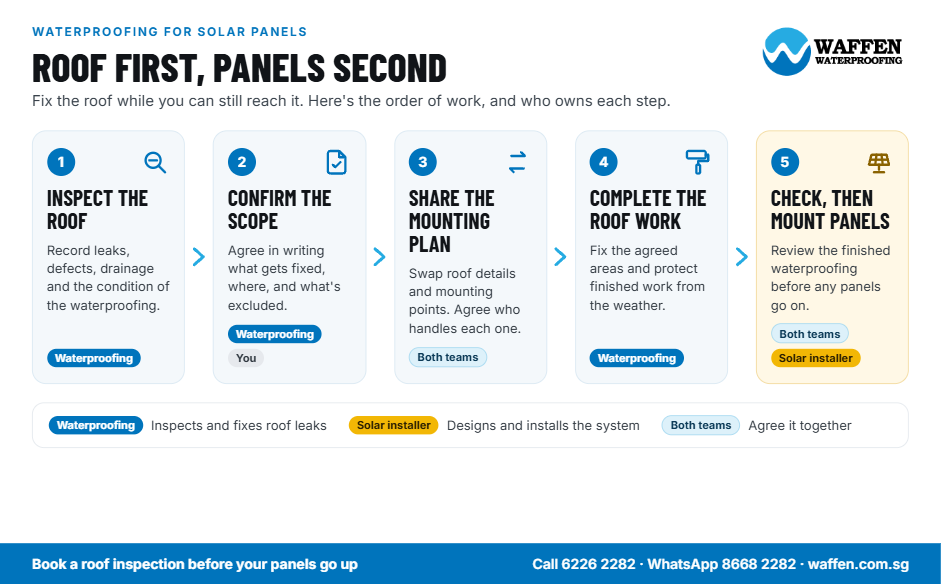
Agree on the order before anyone arrives. This is a practical framework, but the exact order depends on the inspection and the contractors’ advice.
- Inspect the roof. Record defects, signs of water getting in, drainage issues and the condition of existing waterproofing.
- Confirm the scope. Agree in writing which repairs are needed, where, and what’s excluded. Don’t assume a full renewal.
- Coordinate the designs. Share roof details and planned mounting points between the solar installer and waterproofing contractor, and confirm who handles each one.
- Complete the roof work. Make sure the area is accessible, and plan around the weather and protecting finished work.
- Check before handover. Review the finished waterproofing and agreed quality checks before mounting starts. Record anything outstanding and who will fix it.
What should happen before mounting begins?
Document the defects found and the work agreed, and make sure both contractors have reviewed the mounting plan together. Confirm the area is ready and finished waterproofing can be protected. If mounting points or roof conditions change, pause and review rather than assume.
What should you keep at handover?
Keep records of the finished waterproofing areas and quality checks, and confirm the mounting won’t damage completed work. Hold on to drawings, product information, photos and contractor records so future maintenance has a clear history.
Site coordination checklist
- Roof access, work areas and responsibilities confirmed
- Weather and protection plan agreed
- Mounting locations and roof details shared before installation
- Inspection findings, photos and handover records kept together
How Do You Choose a Waterproofing Contractor for Solar-Ready Roof Work?
Keep the two jobs separate. A waterproofing contractor assesses and fixes roof leaks. Solar design, mounting and panel installation belong to the solar professional. Look for a contractor who starts with an inspection, documents the scope clearly and is willing to work with your solar installer.
What should you ask before appointing a contractor?
- What roof defects were found, and how will they be documented?
- Which areas are included, and what’s excluded?
- Who coordinates access and checks each roof detail?
- What quality checks will be recorded at handover?
When should you book a professional inspection?
Book one before installation if:
- The roof has active leaks, damp or visible wear
- You’re not sure what roof system you have
- You don’t know how the mounting method will interact with it
- The plan includes new penetrations that may need extra detailing
For condos or other managed properties, involve the property manager or building decision-maker early in case approvals are needed.
Why Waffen Waterproofing?
Waffen Waterproofing is BCA-accredited and HDB-licensed, with onsite inspections, trained technicians, moisture detection, final quality checks and warranties. We assess and fix roof leaks and work alongside your solar installer. We don’t design or install solar systems.
Planning solar panels? Book a roof inspection with Waffen Waterproofing before installation begins.
Frequently Asked Questions
Should waterproofing be done before solar panel installation?
Yes, if the inspection finds leaks or wear that need fixing. The roof is easiest to reach before panels go up, and both contractors can plan together. It doesn’t mean every roof needs new waterproofing. Base the work on the roof’s condition and the mounting details.
Can solar panels cause roof leaks?
Not on their own, but some mounting methods or later work can affect the roof covering and waterproofing. The risk depends on your roof type and how penetrations are treated. Ask your installer to explain the mounting plan and have a waterproofing specialist check it.
How do you waterproof a roof for solar panels?
Start with an inspection, then match the work to the roof’s condition and mounting details. That may mean fixing a specific defect or detailing a vulnerable point, not necessarily a new membrane. Agree the scope with your solar installer before mounting starts.
Does every roof need a new waterproofing membrane before solar panels go up?
No. If the existing waterproofing works and no defects are found, full renewal may not be needed. Leaks, wear or mounting details that affect the system may still need repair. An onsite inspection will tell you.
What should I check before installing solar panels on a flat concrete roof?
Check for leaks, cracks, damaged finishes, ponding and drainage issues, plus the condition of the existing waterproofing. Ask how mounting bases and cable routes will affect drainage, and confirm access for installation and future maintenance.
Who should coordinate the waterproofing and solar work?
You or your project decision-maker. Make sure the solar installer and waterproofing contractor share roof and mounting information, and that each confirms their own scope, including access, protection and checks. Put it in writing.
Can a roof leak be repaired after solar panels are installed?
Often yes, but the panels or mounting hardware may block access to the source. Some repairs need the solar installer to give access or move equipment. Get an inspection rather than assuming the damp patch marks the entry point, and coordinate any repair with both contractors.

Sorry, the comment form is closed at this time.