

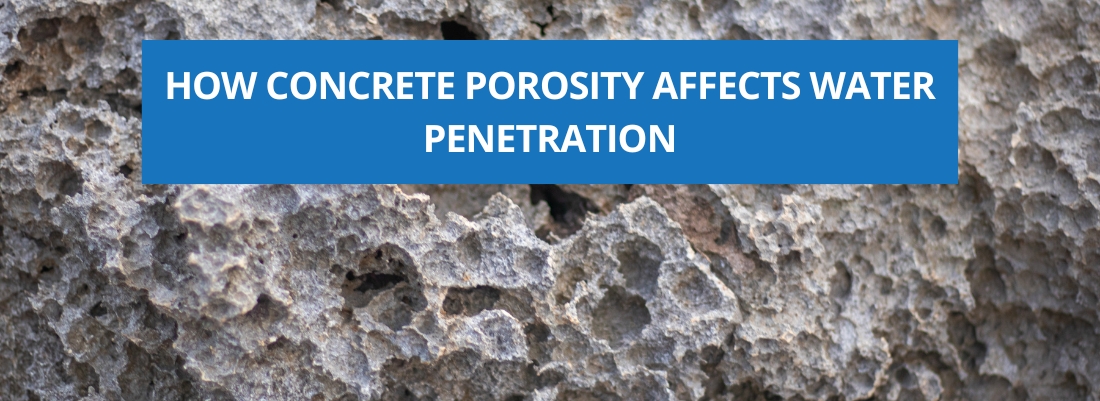
27 Jul How Concrete Porosity Affects Water Penetration
Concrete is often viewed as a solid, waterproof building material. However, many property owners are surprised to learn that concrete is naturally porous. Even well-constructed concrete contains microscopic pores, capillaries, and tiny voids that can allow water to move through the structure over time.
Understanding how concrete porosity affects water penetration is essential for preventing leaks, dampness, and long-term structural damage. Whether it’s a basement wall, rooftop slab, retaining wall, or bathroom floor, the porosity of concrete plays a significant role in determining how resistant a structure is to water intrusion.
A Quick Answer
Concrete is not completely waterproof. The more porous the concrete, the easier it is for water to penetrate through tiny pores and capillary pathways.
High porosity can lead to seepage, dampness, mould growth, reinforcement corrosion, and waterproofing failures. Proper concrete design, installation, and waterproofing are essential to control water penetration.
What Is Concrete Porosity?
Concrete porosity refers to the amount of empty space within the concrete structure.
During the mixing and curing process, tiny air pockets and capillary channels form within the concrete. These spaces may be microscopic, but they create pathways through which water can travel.
The level of porosity depends on several factors, including:
- Water-to-cement ratio
- Quality of materials used
- Mixing consistency
- Compaction during placement
- Curing conditions
- Age of the concrete
Even when concrete appears dense and solid, it contains interconnected pores that can absorb and transport moisture.
Why Water Can Travel Through Concrete
Many people assume that water only enters through visible cracks.
In reality, water can penetrate concrete even when no cracks are present.
This happens through a process known as capillary action.
The tiny pores within concrete act like miniature tubes that draw water through the structure. As moisture enters one side of the concrete, it can gradually move deeper into the material and eventually emerge on the opposite side.
This is why basement walls, retaining walls, and external concrete surfaces can develop damp patches despite appearing structurally sound.
Factors That Increase Concrete Porosity
High Water-to-Cement Ratio
Adding excess water during mixing makes concrete easier to pour and work with.
However, as the water evaporates during curing, it leaves behind additional voids and capillary channels.
The result is more porous concrete that is more vulnerable to water penetration.
Poor Compaction
Concrete must be properly compacted during installation to remove trapped air pockets.
Insufficient compaction leaves larger voids within the structure, increasing permeability and reducing durability.
Inadequate Curing
Proper curing allows cement particles to hydrate fully and develop a dense structure.
When concrete dries too quickly, incomplete hydration occurs, leading to higher porosity and reduced strength.
Segregation of Materials
Poor mixing or improper placement can cause aggregate and cement paste to separate.
This creates weak areas where water can penetrate more easily.
Ageing and Wear
Over time, environmental exposure, temperature changes, and chemical reactions can increase the permeability of concrete, especially if the surface is left unprotected.
Common Problems Caused by Water Penetration
When water moves through porous concrete, it can create a range of issues.
Damp Walls and Floors
Moisture travelling through concrete can appear as damp patches on interior surfaces.
These areas may remain wet for extended periods, particularly during rainy seasons.
Efflorescence
As water moves through concrete, it can carry dissolved salts to the surface.
When the water evaporates, a white powdery residue known as efflorescence is left behind.
Although often mistaken as a cosmetic issue, efflorescence can indicate ongoing moisture intrusion.
Mould and Mildew Growth
Persistent moisture creates conditions that support mould growth.
This can affect indoor air quality and damage finishes, furnishings, and stored belongings.
Reinforcement Corrosion
Water penetration can eventually reach embedded steel reinforcement bars.
Once corrosion begins, the expanding rust places pressure on surrounding concrete, causing cracking and spalling.
Structural Deterioration
Long-term exposure to moisture weakens concrete over time and can shorten the lifespan of the structure if left untreated.
Areas Most Vulnerable to Water Penetration
Certain parts of a building face greater risk because they are regularly exposed to water or groundwater pressure.
Basements
Basement walls are constantly subjected to moisture from surrounding soil.
Porous concrete can allow groundwater seepage to occur over time.
Roof Slabs
Flat concrete roofs are exposed to rainfall and standing water.
Without proper waterproofing, water can gradually penetrate through the slab.
Retaining Walls
Retaining walls hold back soil that may become saturated after heavy rain.
Hydrostatic pressure increases the likelihood of water entering through porous concrete.
Bathrooms
Concrete substrates beneath tiles can absorb water if waterproofing membranes fail or deteriorate.
Balconies and External Decks
These areas experience regular exposure to rain, making them particularly vulnerable to moisture intrusion.
How Waterproofing Helps Control Water Penetration
Since concrete is naturally porous, waterproofing serves as an additional protective barrier.
Different waterproofing systems address porosity in different ways.
Cementitious Waterproofing
Cement-based waterproof coatings bond directly to concrete surfaces and help block water movement through pores.
Crystalline Waterproofing
Crystalline products react with moisture and free lime within the concrete.
This reaction forms crystals that fill capillary pathways and reduce permeability.
Waterproof Membranes
Membranes create a physical barrier that prevents water from reaching the concrete surface.
They are commonly used on roofs, basements, and wet areas.
Polyurethane Injection
For leaking cracks and joints, polyurethane injection can stop active water ingress and prevent further penetration.
Can Waterproof Concrete Be Made Completely Waterproof?
No concrete can be considered permanently waterproof without proper protection and maintenance.
Even high-performance concrete can develop cracks, shrinkage, or wear over time.
The goal is not to eliminate porosity entirely but to reduce water movement to a level that prevents damage.
A combination of quality concrete construction and professional waterproofing provides the most effective long-term defence.
Signs That Water Is Penetrating Through Concrete
Property owners should watch for:
- Damp patches on walls or floors
- Peeling paint
- Efflorescence
- Water stains
- Mould growth
- Musty odours
- Cracked or spalling concrete
These signs often indicate that moisture is already moving through the concrete structure.
Conclusion
Concrete may look solid, but its porous nature means water can gradually penetrate through microscopic channels over time. Factors such as poor curing, excessive water content, inadequate compaction, and environmental exposure can increase porosity and make structures more vulnerable to moisture problems.
Understanding how concrete porosity affects water penetration helps property owners identify risks early and take preventive action before serious damage develops.
Need Professional Waterproofing Advice?
If you’re dealing with damp concrete walls, water seepage, basement leaks, or general waterproofing concerns, it’s worth seeking professional advice before the problem worsens.
The team at Waffen Waterproofing can assess the extent of moisture penetration, identify the underlying causes, and recommend suitable waterproofing solutions tailored to your property’s specific needs.
Whether it’s an early warning sign or an existing issue, getting the right guidance early can go a long way in protecting your property for the long term.

Sorry, the comment form is closed at this time.