

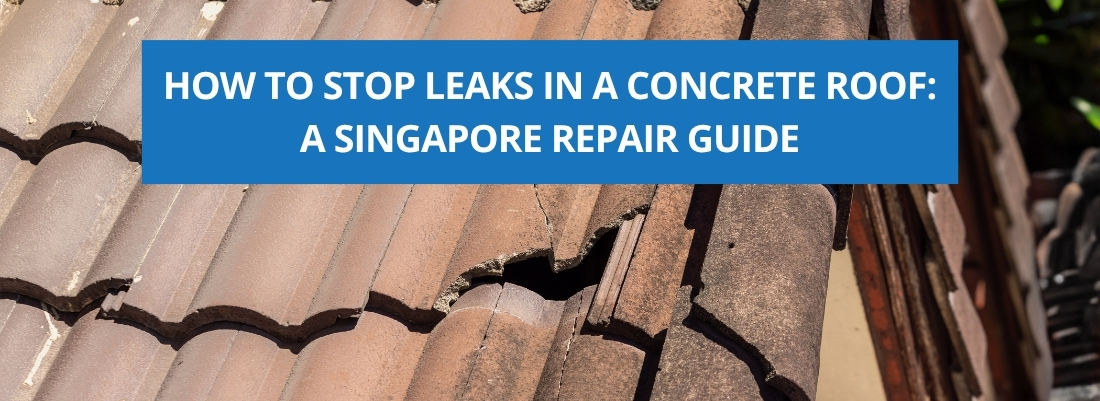
23 Oct How to Stop Leaks in a Concrete Roof: A Singapore Repair Guide
Quick answer: To stop a concrete roof leak, find where the water is getting in before you repair anything. The ceiling stain is often nowhere near the actual entry point, so patching it won’t stop the leak. Once the source is found, a single leaking crack may suit PU injection grouting. A worn waterproofing layer across the roof usually needs a waterproofing membrane.
In Singapore’s heavy rain, cracks, worn membranes, joints and poorly draining areas can all let water through. This guide covers what you can safely check yourself, which repair fits which cause and when to call a professional.
Key Takeaways
- Trace the water entry path. Don’t just treat the ceiling stain.
- Record when dampness appears and how it changes, and share this with your inspector.
- Different causes need different repairs. A crack and a failed membrane aren’t fixed the same way.
- Protect your belongings, document the damage and keep people away from unsafe areas.
- An onsite inspection with moisture detection gives Waffen Waterproofing a clear repair scope.
Table of Contents
- Why Doesn’t Patching the Stain Stop a Concrete Roof Leak?
- How Can You Trace a Roof Leak Safely?
- Which Repair Method Fits Your Roof Leak?
- What Should You Do Before and During a Repair?
- How Does Waffen Waterproofing Fix Concrete Roof Leaks?
Why Doesn’t Patching the Stain Stop a Concrete Roof Leak?
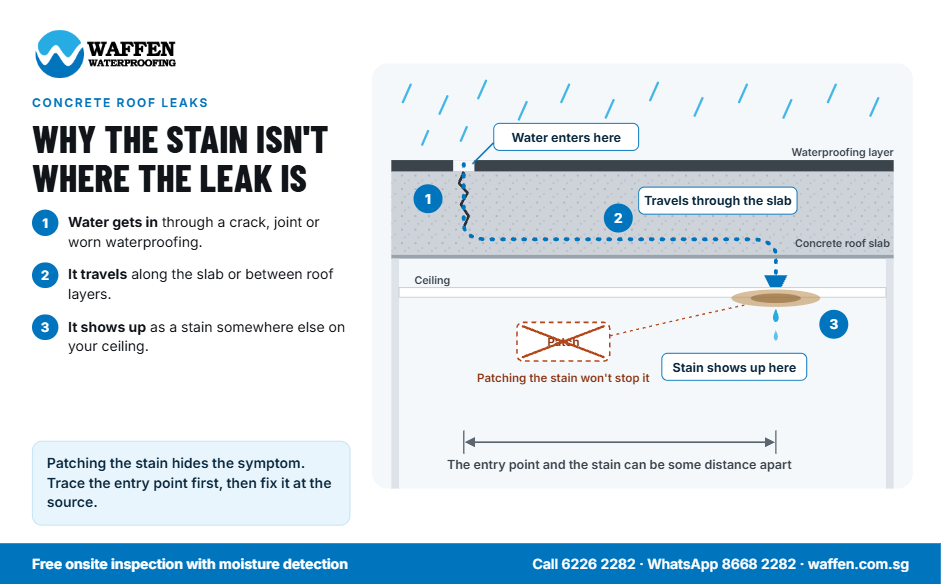
Because water rarely drips straight down from where it enters. It can travel through concrete or along roof layers before showing up indoors, so the damp patch may be some distance from the actual defect. Sealing the stain or the nearest crack only hides the symptom.
Singapore’s frequent heavy rain and humidity put constant stress on roof surfaces and waterproofing. Concrete roof waterproofing uses a water-resistant barrier or system to keep water out and protect the structure underneath.
What are the signs of a concrete roof leak?
- Ceiling stains that keep coming back
- Damp patches
- Peeling paint or plaster
- Drips after rain
These are useful clues, especially when they return in the same spot, but they don’t tell you which roof defect is responsible. A photo records what you see but can’t prove the cause or the full water path.
Why can the leak appear far from its source?
Water may enter through a crack or joint, then run along the underside of the slab or between roof layers before it becomes visible inside. Roof slopes, service openings and drainage routes all affect where it collects. That’s why an indoor stain isn’t a map of the roof defect.
When should you stay clear and call for help?
- Don’t climb onto a wet roof or disturb a damaged area.
- Take extra care if there’s active dripping, a bulging ceiling, or water near lights, switches or other electrical fittings.
- Keep people away from the affected area and don’t touch exposed electrical parts.
- Record what you can safely see from inside, then arrange an assessment.
How Can You Trace a Roof Leak Safely?
Your notes help a professional narrow down the water path, though they won’t confirm the cause on their own. Keep your checks non-invasive and stay off the roof.
What should you record?
- Timing. When does dampness or dripping start, how long does it last, and does it follow heavy rain? Note whether it continues in dry weather or changes after roof access or maintenance.
- Indoor signs. Mark where stains, peeling finishes or damp patches appear and whether they grow or shift. Take photos from the same angles so changes are easy to compare.
- Repair history. List any earlier patching or coating work and when it was done, if you know.
If you can safely view the roof from a suitable access point, note drains, joints, pipes or cracks in relation to the indoor signs. Don’t climb, pressure-wash, cut or drill into the roof. Keep what you can actually see separate from what you suspect.
Which roof areas need a professional check?
A specialist will usually look at:
- Cracks and construction joints
- Upstands and roof-to-wall junctions
- Service penetrations such as pipes and vents
- Areas where water pools or drains poorly
A visible problem doesn’t automatically prove it caused the leak. Onsite inspection and moisture detection help find hidden water paths that a ceiling mark or photo can’t show. If a membrane is being considered, the concrete surface also needs proper preparation. The American Society of Concrete Contractors outlines concrete surface preparation standards for this part of the work.
Waffen Waterproofing’s concrete roof leak inspection uses onsite checks and moisture detection to trace the water path and set the right repair scope.
Which Repair Method Fits Your Roof Leak?
It depends on what the inspection finds. A single leaking crack needs a different fix from a roof where the waterproofing layer has worn out across a wide area.
| What the inspection finds | Possible repair | What needs checking |
|---|---|---|
| Active leak through a specific crack | PU injection grouting | The crack’s condition, how much water is coming through, and the surrounding concrete |
| Waterproofing worn out across a wide area | Waterproofing membrane | The existing roof surface, preparation needed, and detailing at joints and penetrations |
| Water pooling in a poorly draining area | Fix the drainage issue as part of the repair | Pooling may contribute, but doesn’t prove the full cause on its own |
| Leak near a joint, upstand or roof penetration | Targeted repair or membrane detailing | The entry path and the surrounding waterproofing, assessed together |
When is a waterproofing membrane the right fix?
A membrane is a surface waterproofing layer that keeps water out across the whole area it covers. It suits roofs where the existing waterproofing has failed over a wider area, not just at one crack. Good surface preparation and careful detailing where the membrane meets joints, upstands and penetrations are essential.
When is PU injection grouting the right fix?
Polyurethane resin injection seals certain cracks that carry water through concrete. It’s a targeted crack treatment, not a replacement for waterproofing a whole roof when the membrane has worn out. A specialist needs to assess the crack, the water flow and the surrounding concrete first.
Neither method suits every leak. Find the water path, work out whether the problem is local or widespread, then match the repair to it.
What Should You Do Before and During a Repair?
How should you prepare the area?
- Protect your belongings. Move furniture and valuables away from drips. Only place a container under a leak if it’s safe, with no electrical fittings or unstable ceiling nearby.
- Record the damage. Photograph stains, damp patches or drips from a safe spot. Don’t touch wet electrical fittings or bulging finishes.
- Keep the area accessible. Clear safe access and have your notes ready: when the leak happens, how it changes and any past repairs.
Leave roof access and testing to trained personnel.
What should a good repair process include?
| Stage | What happens |
|---|---|
| Inspection | The roof surface, cracks, joints, penetrations and drainage are checked, with moisture detection for hidden water paths |
| Scope | Findings decide the fix. Crack injection and membrane waterproofing aren’t interchangeable |
| Preparation and application | Depends on the system. Membranes need proper surface prep and detailing; cracks need assessment before injection |
| Curing | The repair cures as specified for the system. Don’t judge it ready by looks alone |
| Quality checks and aftercare | Final checks, plus clear written scope and aftercare: what was fixed and what to watch for after rain |
How Does Waffen Waterproofing Fix Concrete Roof Leaks?
Waffen starts with an onsite inspection and moisture detection to find where water is getting in and how it’s travelling, then recommends a repair to match.
What happens during an onsite assessment?
Trained technicians review the indoor signs and check the roof and concrete. Depending on the site, this includes visible cracks, joints, penetrations, drainage areas and the existing waterproofing layer. Moisture detection helps trace hidden water paths, and the findings are read together rather than relying on one reading or stain.
You then get a project-specific quote and scope:
- Local problem: PU injection grouting for a suitable crack
- Widespread problem: membrane waterproofing across the affected area
What happens after the scope is agreed?
The surface or repair area is prepared, technicians carry out the specified work, and final quality checks follow. Every job is tailored to the site.
Waffen Waterproofing is BCA-accredited and HDB-licensed, and repairs come with warranties, with the details set out for each job.
If the inspection also finds concrete damage beyond the leak, see our guide to spalling concrete repair in Singapore.
Water keeps coming back after rain? Book an onsite roof leak inspection with Waffen Waterproofing and get a clear plan to fix it at the source.
Frequently Asked Questions
How do you stop a leak in a concrete roof?
Find where the water is getting in, then match the repair to the cause. Record when the leak appears and where dampness shows indoors, but don’t assume the stain marks the defect. An onsite assessment will tell you whether you need PU injection grouting, membrane waterproofing or another fix.
Can I seal a concrete roof leak myself?
You can safely record symptoms, note whether they follow rain and take photos from accessible areas. Don’t climb onto a wet roof, drill into concrete or apply sealant without knowing the cause. A surface patch often misses leaks travelling through joints or roof layers, and roof work carries safety risks.
Why does my concrete roof still leak after patching?
The patch probably covered a visible crack or stain without stopping water at its real entry point. The leak may also involve a damaged waterproofing membrane, a separate crack or poor drainage. If dampness returns after rain, the repair needs reassessing against the whole roof.
Is PU injection suitable for every concrete roof leak?
No. It works for certain active leaks through suitable cracks, but it only treats that crack. It doesn’t replace membrane waterproofing when the roof’s waterproofing has failed over a wider area. A professional needs to assess the crack, water flow and surrounding concrete first.
How can I tell if a roof leak is coming from a crack?
A visible crack near the leak is a clue, not proof. Water can travel through concrete or along roof layers, so the stain may be away from the entry point. Onsite inspection and moisture detection can confirm whether the crack is involved.
Should a concrete roof leak be repaired from the inside or outside?
It depends on where the water gets in. Work on the roof surface fixes defects in the membrane, joints or penetrations. Interior work only repairs the resulting ceiling damage and won’t stop water getting in. An assessment tells you which you need.
What should I do if water is actively leaking through my concrete roof?
Keep people clear, especially if the ceiling is bulging or water is near lights, switches or other electrical fittings. Don’t touch wet electrical parts or unstable finishes. If it’s safe, move belongings away and put a container under the drip, then record when it started and book an assessment.

Sorry, the comment form is closed at this time.