

26 Apr The Ultimate Gutter Maintenance Checklist: Protecting Your Singapore Property from Water Damage
Imagine standing in your living room during a typical 3 PM monsoon downpour, only to realize the rhythmic dripping isn’t coming from outside, but from your own ceiling. This common nightmare often starts with a single neglected gutter that fails to channel Singapore’s intense tropical rainfall away from your roofline. You already know that our local humidity and heavy storms put an immense strain on your property’s exterior. With 2021 recorded as one of the wettest years in the last four decades, it’s natural to feel anxious about the high costs of structural repairs when you see water pooling where it shouldn’t.
This article provides the professional clarity you need to secure your home’s structural integrity. You’ll learn how to identify early warning signs of failure, maintain your drainage system effectively, and choose materials that withstand our unique climate. We’ve outlined a definitive plan for seasonal inspections and a guide to understanding the link between drainage and wall seepage. This ensures you know exactly when to call a BCA-accredited specialist to protect your investment before the next storm hits.
Key Takeaways
- Understand how Singapore’s high-intensity tropical rainfall impacts your building’s water discharge system and why standard solutions may fall short.
- Evaluate the most durable materials for your gutter system, balancing cost-effectiveness with resistance to Singapore’s high UV index and coastal salt-air corrosion.
- Access a critical pre-monsoon maintenance checklist to identify and clear debris before the Northeast Monsoon season causes preventable overflows.
- Learn to identify “Tiger Stripes” and other subtle warning signs of drainage failure before they escalate into costly internal ceiling leaks.
- Discover advanced “no-hacking” waterproofing solutions, such as PU injection grouting, to resolve structural seepage without the need for disruptive construction.
Understanding Rain Gutters in Singapore’s Tropical Climate
In Singapore, a building’s water discharge system is a critical structural necessity rather than a simple add-on. A rain gutter serves as the primary channel for managing heavy rainfall, ensuring that the massive volume of water hitting the roof is diverted safely away from the property. Singapore receives an average annual rainfall exceeding 2,100mm, often delivered in high-intensity bursts during monsoon seasons. These tropical conditions require high-capacity drainage solutions that can handle rapid surges without overflowing. Without a functioning gutter, rainwater cascades directly off the roof edge, creating a “splashback” effect. This phenomenon erodes external wall paint and saturates the soil at the base of the building, which can eventually destabilize foundations and cause rising damp issues in ground-floor units.
Singaporean architecture typically incorporates three specific gutter designs to manage these loads. Eaves gutters are common on landed properties with pitched roofs. Valley gutters are installed where two roof slopes meet, often collecting the highest volume of water. Parapet gutters are frequently found in modern commercial buildings and HDB blocks, where they are integrated into the top edge of the wall. Understanding Rain Gutters and their specific roles allows property owners to identify which system they have and how to maintain it effectively against the local climate’s unique demands.
The Anatomy of a Functional Gutter System
Why Gutters are the First Line of Waterproofing
Gutters function as the primary defense for the building envelope. When water flow is uncontrolled, it finds its way into hairline cracks, leading to persistent roof and ceiling leaks. This moisture ingress creates a breeding ground for mold and degrades the integrity of the roof membrane over time. Maintaining the health of your drainage path directly extends the lifespan of your waterproofing layers. If the system overflows, water seeps behind the fascia board and rots the timber, eventually compromising the interior ceiling. As a BCA accredited specialist, Waffen Waterproofing emphasizes that a clear drainage path is vital for maintaining a dry, secure property. A proactive approach to maintenance prevents the anxiety of sudden structural damage during a heavy downpour.
Gutter Material and Design Checklist: Choosing for Longevity
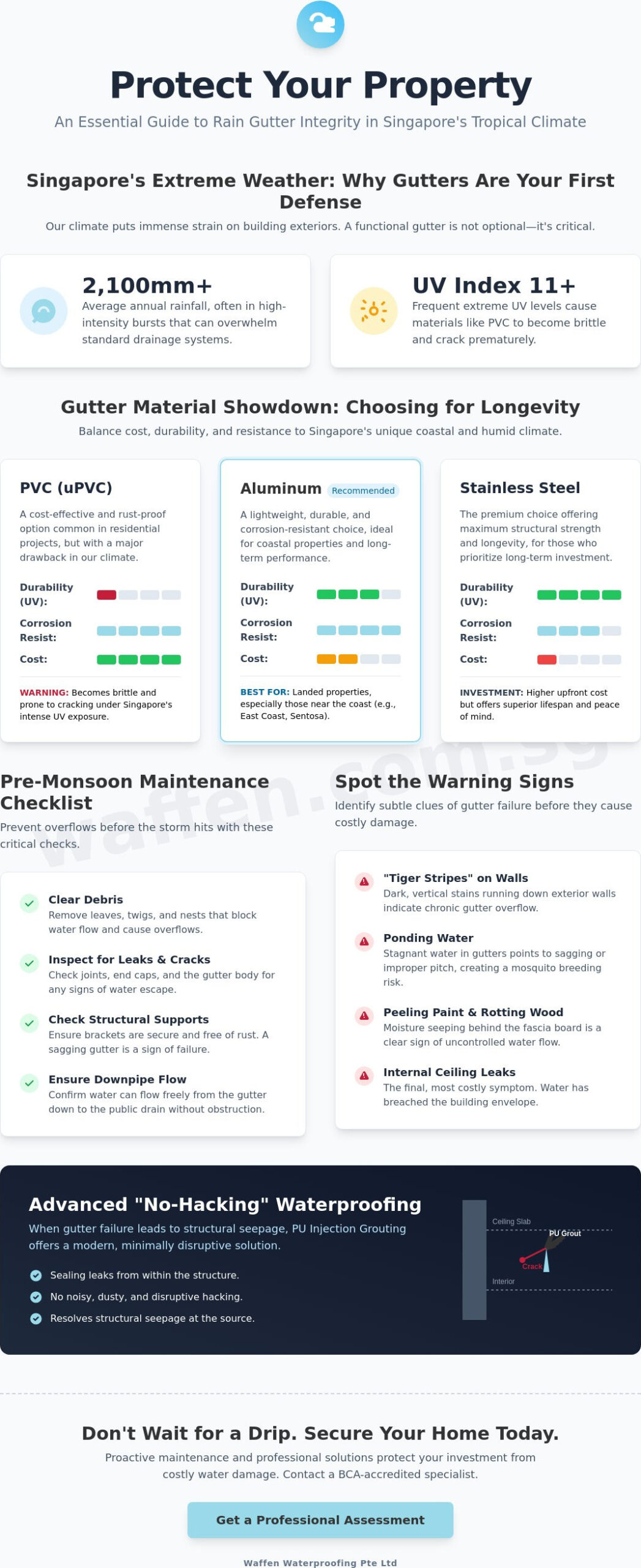
Singapore’s tropical environment subjects every gutter system to extreme UV exposure and high humidity. Choosing the wrong material leads to premature failure and costly structural repairs. PVC (uPVC) remains a frequent choice for many residential projects because it’s cost-effective and completely rust-proof. However; the intense UV index in Singapore, which frequently hits extreme levels of 11 or higher, causes PVC to become brittle over time. This brittleness leads to hairline cracks that compromise the system during heavy downpours.
For landed properties, aluminum and stainless steel provide professional-grade durability. Aluminum is lightweight and naturally resists corrosion; it’s particularly effective for the many homes located within 2 kilometers of the coastline. Stainless steel offers the highest structural strength, though it requires a larger initial investment. Copper and zinc are premium options typically seen on heritage buildings or high-end bungalows. These materials develop a protective patina that can last over 50 years, making them a disciplined choice for long-term property preservation.
Material Selection Criteria for SG Homes
Corrosion resistance is a non-negotiable requirement for properties in Sentosa, the East Coast, or Pasir Ris. Salt-air accelerates the oxidation of inferior metals, leading to leaks within just 3 to 5 years of installation. Thermal expansion also plays a major role in system longevity. Singapore’s daily temperature cycle causes materials to expand and contract; this movement can tear apart weak joints. A gutter must be installed with expansion joints to maintain integrity. From an aesthetic standpoint, the material should complement the building’s facade, whether it’s a sleek modern HDB block or a preserved colonial-style bungalow.
Sizing and Capacity Requirements
Singapore experiences some of the most intense rainfall rates in the world, often exceeding 100mm per hour during monsoon seasons. Standard channels are frequently overwhelmed, which is why “Monsoon Gutters”-oversized channels with deeper profiles-are becoming the industry standard for local landed estates. Calculating the correct width is a technical process based on the total roof surface area and peak rainfall data provided by the NEA.
The “pitch” or slope of the system is equally critical. A slope of at least 1:200 is necessary to ensure water flows toward the downpipes without stagnating. Stagnant water isn’t just a weight burden; it’s a breeding ground for Aedes mosquitoes, which poses a public health risk. When performing a step-by-step gutter maintenance check, always verify that the slope hasn’t shifted due to loose brackets. If you detect pooling or sagging, it’s best to contact a Reliable waterproofing specialist to recalibrate the system before the next heavy storm causes internal seepage.
The Essential Gutter Maintenance Checklist for Homeowners
Maintaining a functional gutter system is a non-negotiable responsibility for Singaporean homeowners. Neglect leads to water ingress, foundation erosion, and costly structural repairs. As a BCA-accredited waterproofing specialist, Waffen Waterproofing recommends a systematic approach to inspection before the Northeast Monsoon arrives in November. This period, lasting through January, accounts for a significant portion of Singapore’s average annual rainfall of 2,166mm. A proactive check prevents the sudden failure of drainage components during peak intensity storms.
- Pre-Monsoon Inspection: Examine the entire perimeter for structural alignment. Look for sagging sections that indicate failing brackets or heavy sediment buildup.
- Debris Removal: Clear accumulated leaves, silt, and abandoned bird nests. These obstructions force water to overflow, which often saturates the external facade and leads to wall cracks.
- Leak Testing: Run a garden hose at a moderate flow into the high point of the channel. Watch for water dripping from hidden seam failures or rusted sections underneath.
- Joint and Sealant Check: Inspect all connections for cracked silicone or loose rivets. Tropical heat causes material expansion and contraction; this eventually compromises industrial-grade sealants.
Step-by-Step Cleaning Guide
Safety is the primary concern for any maintenance task. Use a stable, industrial-grade ladder on level ground or hire a bizsafe-certified specialist for rope access on multi-story landed properties. Begin by hand-removing large debris with a scoop. Don’t flush large clumps down the downspout, as this creates blockages in the ground-level perimeter drains. Use a pressure washer at a controlled setting to clear remaining silt. If you identify gaps, apply a high-performance polyurethane sealant once the surface is completely dry. Professional equipment ensures the gutter remains clear without damaging the roof tiles or fascia boards.
Frequency and Timing
Singapore’s tropical climate requires a minimum of two comprehensive cleanings per year. Schedule these in October and April to prepare for the changing monsoon seasons. Monitor the system after major flash floods or windstorms to check for loose brackets. While gutter guards can reduce the frequency of leaf accumulation, they often trap fine silt and organic matter that promotes moss growth in humid conditions. They aren’t a substitute for manual inspections. For property owners seeking peace of mind, a same-day free onsite inspection by a qualified professional can identify underlying issues before they require expensive pressure grouting or membrane replacement.
Warning Signs: When Gutter Failure Leads to Structural Seepage
Identifying early warning signs prevents minor issues from becoming expensive structural repairs. One of the most visible indicators is the appearance of “tiger stripes.” These dark vertical stains form on external walls when a gutter overflows, carrying soot and debris down the building facade. In Singapore’s intense tropical rain, these marks signal that your drainage system can no longer manage the water volume effectively.
Blocked systems also pose significant risks to top-floor units. When water backs up, it often finds a path through the roof joints, resulting in internal ceiling leaks. Beyond the roofline, overflowing water creates persistent puddles at the building’s base. This leads to foundation erosion, weakening the soil stability that supports the structure over time. Stagnant water in a clogged gutter is a major concern for the National Environment Agency (NEA). Property owners must ensure clear drainage to prevent Aedes mosquito breeding, as failure to do so results in strict penalties and legal action under the Control of Vectors and Pesticides Act.
Connecting Gutter Health to Wall Cracks
Moisture from a failing drainage system seeps deep into concrete pores. This constant dampness leads to rebar corrosion within the slab. As the internal steel rusts and expands, it forces the concrete to crack and break away, a condition known as spalling concrete. This is a common structural defect in both HDB flats and private landed estates across Singapore. Hydrostatic pressure refers to the physical force exerted by standing water against your building’s exterior walls, which accelerates the penetration of moisture through the masonry and into your living space.
Identifying Hidden Leaks with Technology
Modern diagnostic tools allow for precise leak detection without unnecessary hacking. Waffen Waterproofing utilizes thermal imaging to track the exact path moisture takes from a faulty system into your bedroom ceiling. We also employ moisture meter testing to measure saturation levels in walls adjacent to downpipes. If your walls remain damp even after clearing debris, it’s time to move from basic cleaning to professional structural waterproofing repair. Our BCA-trained specialists provide a 12-month warranty on all rectification works to ensure long-term peace of mind. To ensure you engage the right professionals for the job, consult our guide on choosing a waterproofing contractor in Singapore that meets BCA-accredited standards.
Protect your property from structural damage today. Contact Waffen Waterproofing for a same-day free onsite inspection to assess your drainage health.
Professional Gutter Integration and Waterproofing Solutions
Professional gutter maintenance requires more than a simple ladder and a bucket. While a general handyman might clear debris, they often lack the technical expertise to address structural vulnerabilities. As a BCA-accredited waterproofing specialist, Waffen utilizes advanced leak diagnostics to identify issues before they cause internal damage. We don’t just look for clogs; we analyze the integrity of the entire drainage system.
A common problem in Singapore involves gutter overflow leading to seepage through the concrete slab or wall joints. We solve this using PU injection grouting. This “no-hacking” solution involves injecting a reactive polyurethane resin into cracks. The resin expands upon contact with moisture, creating a permanent, flexible seal without the need for expensive demolition or noisy hacking. It’s an efficient way to stop active leaks during the monsoon season. Before commissioning any repair works, it’s worth understanding what separates a qualified waterproofing contractor in Singapore from an unqualified one, so you can make an informed decision that protects your property long-term.
For high-rise condominiums and commercial buildings, standard equipment isn’t enough. Our rope access services allow our technicians to reach difficult areas safely and effectively. This ensures that every inch of the drainage system is inspected and maintained, adhering to strict safety protocols. By employing IRATA-certified professionals, we provide a level of precision that standard maintenance crews cannot match.
Integrated Roof and Gutter Protection
Waterproofing fails most often at the joints and transitions. We apply high-quality membranes that extend from the roof directly into the gutter valley. This creates a seamless barrier against tropical downpours. Our technicians ensure that different waterproofing systems, such as torch-on membranes and liquid-applied coatings, bond perfectly at the edges. Every repair we perform comes with a Waffen 12-Month Warranty, providing long-term security for your investment.
Hiring a Licensed Contractor in SG
In Singapore, compliance is non-negotiable for property safety. Property owners should always verify HDB licenses and BizSafe certifications before commissioning work. These credentials guarantee that the contractor follows rigorous safety standards and possess the technical training required for complex repairs. We prioritize a safety-first mentality in every project we undertake. If you’re facing an urgent leak, we provide a Same Day Free Onsite Inspection to assess the damage and propose a reliable solution.
Secure Your Property Against Singapore’s Tropical Downpours
Waffen Waterproofing brings over 10 years of specialized experience in Singaporean structural repairs to every project. As a BCA-accredited and HDB-licensed specialist, we utilize advanced moisture detection technology to identify hidden leaks before they escalate into expensive emergencies. Our team provides precise solutions backed by a 12-month warranty, giving you the peace of mind you deserve. We’ve earned our reputation through rigorous adherence to safety standards and technical excellence. Don’t wait for the next monsoon to test your roof’s integrity. Take a proactive step toward a leak-free home and ensure your property remains a safe haven.
Get a Reliable Free Onsite Inspection for Your Gutter and Roof Today
Frequently Asked Questions
How often should I clean my gutters in Singapore?
You should clean your gutters at least twice a year to maintain optimal drainage performance. Singapore receives an average annual rainfall of 2,166mm, making regular maintenance essential. It’s best to schedule cleanings before the Northeast Monsoon in November and the Southwest Monsoon in June. If your property is located near large rain trees, you’ll likely need to clear debris every 3 months to prevent blockages.
Can a blocked gutter cause a ceiling leak inside my house?
A blocked gutter is a primary cause of internal ceiling leaks in landed properties. When water cannot flow through the downpipe, it overflows back into the roof eaves and seeps along the internal rafters. This moisture eventually penetrates your ceiling boards. Industry data shows that 40% of residential roof leaks are directly linked to poor gutter maintenance and debris buildup.
What is the best material for gutters in a tropical climate like SG?
Aluminum and high-grade uPVC are the most durable materials for Singapore’s humid environment. Aluminum resists corrosion from the 80% average humidity levels we experience daily. While uPVC is a cost-effective, rust-proof option, you should avoid galvanized steel. Steel gutters typically corrode within 5 to 7 years in coastal areas like the East Coast or Sentosa due to salt air exposure.
Do I need HDB or BCA approval to change my external gutters?
You must comply with BCA regulations and HDB guidelines when modifying any external building features. For HDB terrace houses, owners must obtain written permission from HDB before starting works. Private property owners don’t usually need a permit for like-for-like replacements. However, you’re legally required under the Building Maintenance and Strata Management Act to ensure your gutter system doesn’t encroach on neighboring land.
How much does professional gutter cleaning and repair cost in Singapore?
Professional cleaning services for a standard terrace house typically range from S$200 to S$500. Repair costs depend on the damage severity. Minor patch repairs often start around S$150, but a full replacement for a 2-storey semi-detached house can exceed S$2,500. You should always engage a BCA-accredited specialist to provide a site assessment. We offer a same day free onsite inspection to give you an accurate quote.
What are “Tiger Stripes” on my walls, and are they dangerous?
Tiger stripes are dark vertical streaks on your external walls caused by dirt and pollutants washing off the gutter edge. While they aren’t structurally dangerous at first, they’re a sign that your drainage system is failing. These stains indicate that water is overflowing or that the “drip edge” isn’t working. If you don’t treat this, the constant moisture leads to algae growth and concrete spalling.
Can I install gutter guards to stop mosquito breeding?
Installing fine-mesh gutter guards is an effective strategy to prevent mosquito breeding and debris accumulation. NEA regulations require homeowners to ensure no stagnant water exists on their property to prevent Dengue fever. Guards stop leaves from creating small dams that trap water. You’ll still need to inspect the mesh every 6 months because fine silt can sometimes build up underneath the guard.
What should I do if my gutter is sagging or pulling away from the roof?
You should contact a qualified waterproofing specialist immediately to secure the structure. A sagging gutter often means the brackets have rusted or the weight of trapped water has exceeded the system’s load-bearing capacity. This is a safety hazard for anyone walking below the roofline. A professional will check if your fascia board is rotted, as this often requires replacement to provide a secure mounting point.

Sorry, the comment form is closed at this time.