

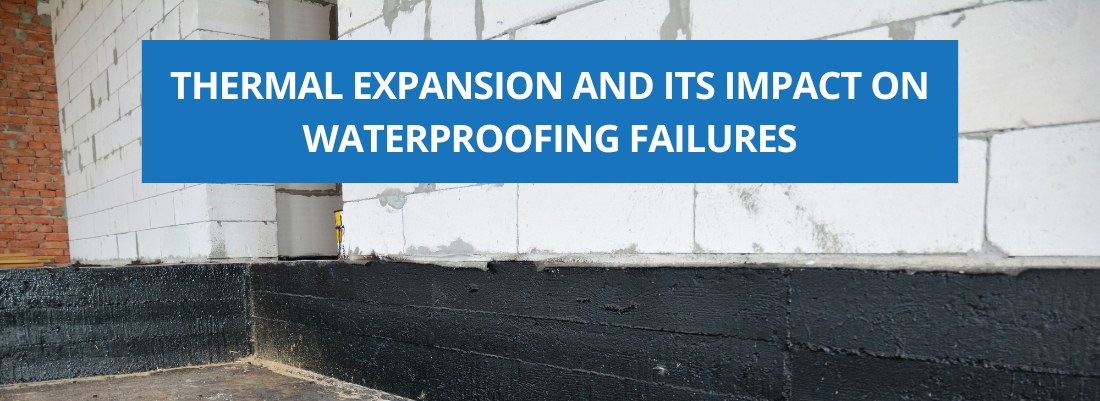
14 Nov Thermal Expansion and Its Impact on Waterproofing Failures
In Singapore’s tropical climate, waterproofing systems face constant stress — not just from rain and humidity, but also from temperature changes. One major cause of waterproofing deterioration that often goes unnoticed is thermal expansion.
Understanding how temperature affects building materials is crucial to preventing cracks, leaks, and premature waterproofing failures. Let’s explore what thermal expansion is, how it impacts waterproofing, and what can be done to mitigate these effects effectively.
What Is Thermal Expansion?
Thermal expansion refers to the tendency of materials to expand when heated and contract when cooled. Every construction material — from concrete and steel to tiles and sealants — expands and contracts at its own rate, known as its coefficient of thermal expansion.
When temperatures rise during the day, building surfaces such as roofs, walls, and floors absorb heat and expand slightly. At night, when temperatures drop, these same materials contract. Over time, this repeated cycle of expansion and contraction causes stress within the structure.
If the waterproofing layer cannot accommodate this movement, cracks and gaps begin to form — leading to leaks, delamination, and water ingress.
Why Thermal Expansion Is a Big Issue in Singapore
Singapore experiences high humidity and significant temperature variations between day and night. For example, surface temperatures on exposed roofs can easily exceed 60°C under direct sunlight, then cool rapidly after sunset.
This daily temperature fluctuation may seem minor, but the repeated expansion-contraction cycle creates cumulative stress, especially in:
- Flat concrete roofs
- Tiled or screeded balconies
- Exterior walls and façades
- Planter boxes and wet areas
Because of this, even high-quality waterproofing systems can deteriorate faster than expected if thermal movement is not properly accounted for during installation.
How Thermal Expansion Causes Waterproofing Failures
1. Cracking of Concrete or Screed
As concrete expands and contracts, micro-cracks develop over time. If the waterproofing layer sits directly on this surface, the cracks can propagate through, allowing water to seep underneath.
2. Delamination of Waterproofing Membranes
Membranes that aren’t flexible or properly bonded may lift or blister when subjected to thermal stress. This delamination creates air pockets and pathways for water to infiltrate.
3. Joint Failures
Expansion joints are meant to absorb movement between structural sections. However, if not correctly sealed with an elastomeric joint sealant, thermal movement can cause the joint seal to harden, crack, or peel away.
4. Tile or Surface Detachment
Tiles installed over poorly detailed waterproofing systems are particularly vulnerable. As substrates expand and contract, the adhesive weakens, leading to tile popping or hollow-sounding floors — both signs of underlying moisture intrusion.
5. Accelerated Material Degradation
Frequent temperature changes can cause bituminous membranes, PU coatings, and sealants to lose elasticity. Once they harden or crack, the waterproofing barrier becomes compromised.
Signs That Thermal Movement Has Affected Your Waterproofing
If your building is showing any of these signs, thermal expansion could be a contributing factor:
- Hairline cracks on walls, floors, or ceilings
- Blistering or peeling waterproofing membranes
- Leaking during heavy rain despite previous waterproofing
- Damp patches or efflorescence on interior walls
- Loose or lifted floor tiles, especially on balconies or rooftops
These symptoms often appear months or even years after installation — highlighting why thermal movement should always be addressed during design and application, not just after leaks occur.
How to Prevent Waterproofing Failures Caused by Thermal Expansion
1. Use Flexible Waterproofing Systems
Select elastomeric or flexible membranes that can stretch and recover with temperature changes. Polyurethane (PU), acrylic, and liquid-applied waterproofing systems are especially suitable for absorbing movement in dynamic structures.
2. Incorporate Proper Expansion Joints
Expansion joints should be strategically placed in large concrete slabs or façade systems. They act as “buffers,” allowing sections to move independently without transferring stress to the waterproofing layer.
3. Ensure Good Substrate Preparation
A clean, dry, and stable substrate is crucial. Any cracks or voids should be repaired before applying waterproofing. A primer or bonding agent can improve adhesion and reduce delamination risk.
4. Apply Sufficient Coating Thickness
Applying too thin a waterproofing layer reduces flexibility and durability. Follow the manufacturer’s recommended thickness to ensure optimal performance against thermal stress.
5. Protect the Waterproofing Layer from UV Exposure
Constant sunlight accelerates material aging. Installing a protective screed, reflective topcoat, or tiling over exposed membranes helps extend their lifespan and maintain elasticity.
6. Engage a Professional Waterproofing Contractor
Working with an experienced specialist ensures the right materials and detailing methods are used for each specific structure. Professionals also perform quality checks to confirm that joints, overlaps, and corners are adequately treated.
Common Waterproofing Systems That Handle Thermal Expansion Well
Not all waterproofing materials react the same to temperature changes. Below are some commonly used systems and how they perform under thermal stress:
Polyurethane (PU) Membrane
Highly elastic and durable, PU membranes are excellent for exposed roofs and balconies. They expand and contract with the surface, preventing cracks.
Cementitious Waterproofing
Often used for internal wet areas, it provides strong adhesion but is less flexible — making it suitable for areas with minimal thermal movement.
Torch-On Bituminous Membrane
Ideal for large flat roofs. Some formulations include additives that improve elasticity and UV resistance, though they still require careful detailing around joints.
Liquid-Applied Waterproofing
Seamless and versatile, liquid systems form a continuous membrane without joints. They’re great for irregular surfaces and high-movement areas like planter boxes.
Why Working with a Specialist Matters
While materials play a vital role, proper design and application ultimately determine waterproofing success. Even the most advanced system can fail prematurely if thermal movement is not considered during installation.
At Waffen Waterproofing, we assess each project’s environmental conditions, substrate composition, and movement patterns before recommending a solution. Our team ensures expansion joints, coating thickness, and protective layers are properly integrated — minimising thermal stress and extending the service life of your waterproofing system.
Final Thoughts
Thermal expansion is an inevitable physical process, but its impact on waterproofing can be controlled through good design, flexible materials, and expert installation. Ignoring it, however, can lead to costly leaks, repairs, and structural damage over time.
If you’re facing recurring leaks or planning a waterproofing project, consult the experts at Waffen Waterproofing. Our specialists will help you identify the right waterproofing system to withstand Singapore’s climate — ensuring lasting protection against thermal movement and water damage.

Sorry, the comment form is closed at this time.